
Events this weekend: Corporations v communities; education & activism

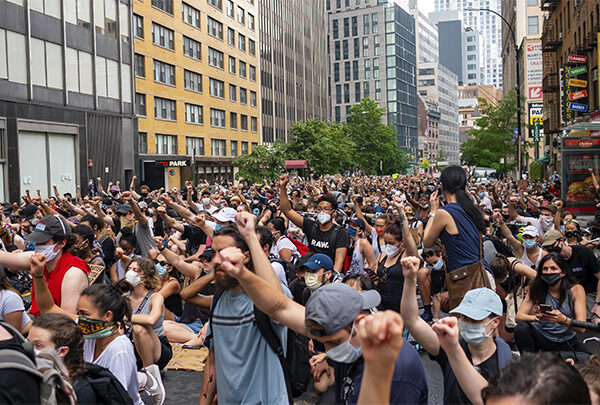
Occupy London is gearing up for Occupy May – details to be announced soon – but this weekend sees a host of events happening at its existing camps as well as around London.

Highlight events include:

5.30pm Friday 23 March – Disrupt Dirty Power Roving General Assembly visiting Tate Modern and the Southbank

On Friday 23 March, Occupy London’s roving General Assembly will focus on enabling local communities to protect themselves against the social, economic and environmental ravages caused by large corporations. Hosted by Occupy London’s Energy, Equity & Environment Working Group, the event ties in with the Disrupt Dirty Power actions happening around the world this weekend for the launch of Earth Month.

“Corporate rights should be subservient to the rights of the community, not the other way around,” commented Peter Coville of Occupy London’s Energy, Equity & Environment Working Group. “It is time to join the dots between the banks and funding fossil fuel corporations, which use their profits to hire lobbyists to pay off government officials to write legislation favouring big oil and big coal.”

  • Meet 5.30pm at St Paul’s, then go across the Millennium Bridge to the Tate Modern for 6pm, where Liberate Tate collective (art activist collective exploring the role of creative intervention in social change) will give a brief presentation on BP’s sponsorship of the Arts.
  • The assembly will then move along the South Bank to opposite the Shell Building for 7pm. Speakers will focus on Shell’s nefarious activities over recent decades, up to and including its present Arctic drilling operations. Melanie Strickland, solicitor and member of Wild Law and Occupy Law UK, will also present the idea of creating a Community Bill of Rights which gives power back to communities and to restrict corporate ‘rights’. As well as the speakers, there will be breakout discussion groups focusing on concrete actions. Facebook event - https://www.facebook.com/events/255697251186406/

2pm – Saturday 24 March – Occupy London General Assembly by the steps of St Paul’s. All are welcome to attend.

Noon Sunday 25 March – Occupy London’s Tent City University talk focusing on education and activism. By the steps of St Paul’s. 

This Sunday, Tent City University invite you to come and compare notes with Mzonke Poni - Chairperson of Abahlali baseMjondolo Western Cape, the inspirational South African movement of shack dwellers, who will talk about activism, movement building, community organising and techniques of occupying and resisting through alternative and resistant education. Facebook event - https://www.facebook.com/events/256059027819429/

Mzonke Poni has been described by the Sunday Times as “the face of an ANC nightmare – an angry activist mobilising the township masses to protest at what he calls the government’s failure to create a better life for the poor.”

More about Abahlali baseMjondolo - http://www.abahlali.org/; More about Abahlali Western Cape go to http://www.khayelitshastruggles.com/

5 thoughts on “Events this weekend: Corporations v communities; education & activism

  1. Sadly I won’t be able to make it to the discussion on communities Vs corporations. Just wanted to highlight the issue of supermarket developments as a point of discussion. I believe this is an issue many can identify with. This piece (pasted in below) is an article I wrote for a our local Shoreham journal which outlines a Transition Town perspective.

    LOCALISATION – A Transition Town perspective

    Looking to the future

    Can you imagine Shoreham in a decade, even beyond 2030; beyond ‘cheap’ oil? How will we travel or heat our homes? What food will we eat? What will our town centre look like? In a 21st century faced with many challenges, we are being asked more urgently than ever to imagine what lies ahead. At the very least we should consider how the global impacts of climate change, depletion of natural resources and possible long term economic recession will affect us at a local level.

    Transition Town groups are locally based yet part of a global Transition Network. Responding to these crucial questions they focus on the need to make our communities stronger, happier and more resilient to these challenges. Essentially this is a local response, setting its sights on a future ‘where a community can meet its key needs locally. For example the need for food, energy and building materials in order to reduce the dependency on externalities that use oil, and increase carbon emissions’.* The term ‘localisation’ is central to the process of building a viable and vibrant local economy that is supported by strong community ties.

    Statutory initiatives

    On the face of it, we see areas of common concern being addressed by national and local government. For example, local planning decisions increasingly need to be hung on Government directives which include ‘cutting carbon emissions’, promoting ‘sustainability’, ‘social inclusion’, ‘wellbeing’ and ‘maintaining the vitality and viability of town centres’. Meanwhile, we see the Coalition Government rolling out its “Big Society” concept in tandem with new Localism legislation. This is presented as the way forward for communities to influence local planning in their areas.

    However, as we try to make sense of new legislation and the various ‘-isms’ of recent policy statements, we need to keep an eye on what these actually mean in practice. For example, it appears that the small print in Localism legislation sets an extremely high bar for neighbourhoods to influence local planning decisions.** Furthermore, with Councils now facing the very real impact of austerity budgets, they are having to think hard about spending priorities. This brings with it the danger that certain issues will be side-lined. ‘Sustainability’ for example, when seen as a stand-alone issue, could effectively be crossed off the list to save money (rather than being seen as something that cuts across all aspects of a Council’s work).

    Are new supermarkets a sustainable form of development?

    The last issue of the Shoreham Society Journal highlighted the imprecise definition of the term ‘sustainable development’. It follows from this, that planning decisions which make a “presumption in favour of sustainable development” can be based on a very limited interpretation of sustainability. It could simply mean that decisions favour developments that are claimed*** to boost economic activity and job creation. In the case of Shoreham this could amount to a controversial decision in favour of two new supermarket developments at the Green Jacket and Civic Centre sites.

    The ability of big-business to finance local infrastructure projects, whilst at the same time manipulating the planning system to ensure their applications are approved, creates a thorny issue for district planners. Without tough central regulation, Officers are loath to challenge the direction this kind of large scale retail leads us into.

    Here in Shoreham, we are well aware of the corrosive effect that supermarkets have had on our town centre and the community it serves. Our fears mirror those of many other communities both in the UK and around the world. The coalition government’s ‘big business as usual’ approach to economic growth (as seen in the monopoly of the ‘big four’ supermarkets) seems far removed from any common understanding of what localism should mean. By promoting a culture of convenience shopping we are pushed ever forwards towards an economic system that relies heavily on oil in methods of food production, a long chain of delivery and increased local car use. Clearly, Government should recognise the benefits of inward investment derived from a strong local economy and do much more to protect small producers and retailers.

    Local resilience and sustainability

    In a time of economic recession, serious thought should be given to ‘localisation’ as a basis for sustainable development. Transition Town groups would welcome any Government initiatives to enable this process, not only in terms of our food economy but also, for example, wind power generation to meet our local energy needs.

    Meanwhile, our intention is not to wait around for action to happen at Government level. What happens next will depend a great deal on the community itself. By making a stand against new supermarket developments we can, at the very least, raise awareness about the need to shop locally in order to support small producers and retailers. At the same time, TransitionTown in Shoreham is looking to improve food resilience by providing support for a Community Supported Agriculture project. If you would like to find out more about (CSA), or can help with contacts for our land search; funding, or, would like to be involved in some way, please contact ttsbys@hotmail.co.uk. or, approach our farmers market stall.

  2. Create some wealth and revenue for this country, stop simply criticizing and discussing. I hope you will be happy to see funding for the Arts disappear because of your campaigning. Its obvious you have no clear vision for this country, which is the reason why you constantly complain but dont campaign for political power in a democratic way. Your campaigns tend to ruin our cities for average working people. I am sure you will do the same in May in the name of anarchy, banker bashing, Oil companies protests etc etc. Why not try to be constructive instead.

    • Constructive?

      Simple.
      Charge the four big banks for the Deposit Insurance the Taxpayers invest on them every year. Plus the bailouts.

      2008 £50 Billion,
      2009 £100 Billion.

      Total bail outs so far. £1.2 Trillion.

      I would support that money going to Education, NHS, Arts.

  3. This has already happened Jamie ? I thought this was going to be a new one..sorry I cant make it to the WG tonight funds are low. But hope to see you soon m :-)

Leave a Reply

Your email address will not be published. Required fields are marked *

*

You may use these HTML tags and attributes: <a href="" title=""> <abbr title=""> <acronym title=""> <b> <blockquote cite=""> <cite> <code> <del datetime=""> <em> <i> <q cite=""> <strike> <strong>